For link to video:
http://www.rnw.nl/english/video/two-dutch-farmers-new-york
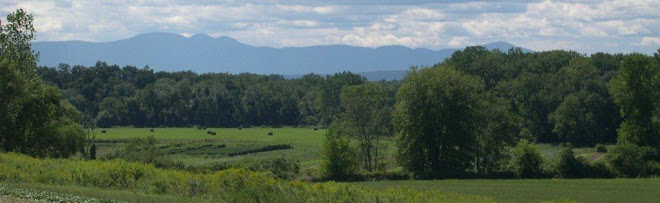
Adrian Ooms and Jean-Paul Courtens are Dutch farmers who left home as young men to start a new life in America. By coincidence, they both ended up in Kinderhook, New York -a place where Dutch farmers were already tilling the soil 400 years ago.
These days Ooms and Courtens are known as exemplary farmers, each in their own specialist field. Dairy farmer Adrian Ooms (pictured in lead photo), born and raised in Schiedam near Rotterdam, has kept his farm small, with about 450 milk cows. This is uncommon in the USA, where most milk is produced on very large dairies. But in a recent trend to reintroduce smaller-scale agriculture in New York state, the Ooms Dairy Farm is often upheld as a model. One of Adrian's sons has even been appointed Vice President of the powerful New York State Farm Bureau, the most important agricultural body in the state.
On nearby Roxbury Farm, run by Jean-Paul Courtens, we find a whole different type of agriculture. Mr Courtens, originally from Amsterdam, sells his biodynamic produce by means of Community Supported Agriculture. In other words, the customer pays an annual sum for a weekly delivery of organically-grown fruit and vegetables. But included in the fee is the right to vote on what crops should be grown on the farm - and the customers can come help out during the harvest too. That's easier said then done, since most of the customers live on Manhattan: four hours by car from this beautiful farm in the Hudson Valley.
Robert Chesal of Radio Netherlands Worldwide
For link to video:
http://www.rnw.nl/english/video/two-dutch-farmers-new-york
Sunday, December 20, 2009

Monday, November 16, 2009
Celeriac Recipes
Celeriac and Butternut Squash Soup
3 TBS butter
1 onion, chopped
1 apple, peeled and chopped
1 celeriac, peeled and chopped
1 clove garlic, minced
Sage and Thyme to taste
1 quart cooked and pureed butternut squash
1 large tomato, chopped or ½ can canned chopped tomatoes
2-4 cups of your favorite stock
½ cup lentils cooked
Salt and Pepper to taste
Saute onions, apple, celeriac, garlic, and herbs in butter until soft. Puree the mixture. Put the pureed celeriac mixture in a soup pot and add pureed butternut squash, tomatoes, stock, and lentils. Heat. Salt and pepper to taste.
from One United Harvest Cookbook on the Winter Green Community Farm website
Mashed Celeriac
1 celeriac, peeled
olive oil
handful of fresh thyme, leaves picked
2 cloves of garlic, finely chopped
sea salt and freshly ground black pepper
3–4 tablespoons water or stock
Slice about ½ inch off the bottom of your celeriac and roll it on to that flat edge, so it's nice and safe to slice. Slice and dice it all up into ½ inch-ish cubes. Don't get your ruler out – they don't have to be perfect. Put a casserole-type pot on a high heat, add 3 good lugs of olive oil, then add the celeriac, thyme and garlic, with a little seasoning. Stir around to coat and fry quite fast, giving a little colour, for 5 minutes. Turn the heat down to a simmer, add the water or stock, place a lid on top and cook for around 25 minutes, until tender. Season carefully to taste and stir around with a spoon to smash up the celeriac. Some people like to keep it in cubes, some like to mash it, but I think it looks and tastes much better if you smash it, which is somewhere in the middle. You can serve this with just about any meat you can think of.
from Chef Jamie Oliver at www.jamieoliver.com
3 TBS butter
1 onion, chopped
1 apple, peeled and chopped
1 celeriac, peeled and chopped
1 clove garlic, minced
Sage and Thyme to taste
1 quart cooked and pureed butternut squash
1 large tomato, chopped or ½ can canned chopped tomatoes
2-4 cups of your favorite stock
½ cup lentils cooked
Salt and Pepper to taste
Saute onions, apple, celeriac, garlic, and herbs in butter until soft. Puree the mixture. Put the pureed celeriac mixture in a soup pot and add pureed butternut squash, tomatoes, stock, and lentils. Heat. Salt and pepper to taste.
from One United Harvest Cookbook on the Winter Green Community Farm website
Mashed Celeriac
1 celeriac, peeled
olive oil
handful of fresh thyme, leaves picked
2 cloves of garlic, finely chopped
sea salt and freshly ground black pepper
3–4 tablespoons water or stock
Slice about ½ inch off the bottom of your celeriac and roll it on to that flat edge, so it's nice and safe to slice. Slice and dice it all up into ½ inch-ish cubes. Don't get your ruler out – they don't have to be perfect. Put a casserole-type pot on a high heat, add 3 good lugs of olive oil, then add the celeriac, thyme and garlic, with a little seasoning. Stir around to coat and fry quite fast, giving a little colour, for 5 minutes. Turn the heat down to a simmer, add the water or stock, place a lid on top and cook for around 25 minutes, until tender. Season carefully to taste and stir around with a spoon to smash up the celeriac. Some people like to keep it in cubes, some like to mash it, but I think it looks and tastes much better if you smash it, which is somewhere in the middle. You can serve this with just about any meat you can think of.
from Chef Jamie Oliver at www.jamieoliver.com
Tuesday, September 15, 2009
Week 15 Newsletter
As most of the crops have been planted or harvested, we are entering a new stage on the farm. While summer is not officially over, we have fully embraced the fall. Last week, we spread compost on next year’s vegetable fields and seeded them down with oats and field peas. This is also a time (while the season is still fresh in our minds) to review what worked well and what didn’t this year. There is always a lot that doesn’t work well and I fully understand that while any new solution could create new problems, we always live with the hope (even after 20 years of trying) to perfect what we do by incorporating necessary changes.
Running a farm is a combination of working with nature, people, and technology. The challenge is to properly address the needs of each component. We have become pretty decent at solving our technological challenges by having kept pace with the 21st century in accessing information and using equipment. As opposed to technology, interacting with nature and people requires an open mind and an open heart, as both are never constant. All you can do is create an environment whereby you foster stability as best you can. And herein lays the challenge.
Jody and I are under no illusion that we have the intellect or the wisdom to create that environment by ourselves, nor should we. The acceptance of our limitations led us to become a CSA farm and immerse ourselves in its underlying philosophy of community. It was the input from and insights of many members that helped bring about the farm as it is today. Very early on, the members understood that in order for a farmer to produce high quality food, the farmer needs to stay on the farm. This was one of the founding principles of Roxbury as a CSA farm. In the early 1990s, the most plausible way to make a farm work economically was to spend three days a week at a farmers market (rather than taking care of the farm). Another small example is that when we expressed the difficulty of growing garlic due to the high labor input at the wrong time of year, the members committed themselves to taking on an important roll in the planting and harvesting of garlic. In short, our relationship has always been about dialogue to find solutions to challenges.
The largest accomplishment of this dialogue is, of course, the purchase and preservation of farmland. The members recognized that we were not in the position to take on a huge debt load to purchase farmland. Members, with the help of the Open Space Institute and Equity Trust, completed a successful fundraising effort in 2002, securing 150 acres, barns, and housing for farmers in perpetuity.
When we say “members” we recognize that it is rather difficult to be in dialogue with all members or that we have a system in place for getting input from you through democratically elected representatives. The members that participate in running the sites, the ones that come to the summits for visioning and budgeting and to the member workdays have always been self-selected. We are deeply grateful for the enormous amount of effort, energy, and goodwill that has poured into the farm since 1990.
Since 2003 I have been concerned that we have started to live under the delusion that Roxbury Farm has everything figured out. So, why hold a summit if we have it all figured out? We admit, we are not a struggling operation and we are not operating in a crisis mode. But, we recognize it to be an oversight to discontinue a platform for dialogue. Of course dialogue continues informally and we appreciate the many e-mails we receive, the feedback on the annual surveys, and the discussions during workdays and CSA pickups. But, when you create a space like we have in our past summits, those types of conversations develop much deeper qualities as we all make a commitment to implement proposed changes.
This fall, we are seeking members to participate in a summit at the farm again. We want to exchange thoughts and ideas for the long-term future of Roxbury Farm. A diverse perspective from members, farm coworkers, and us will make for a fuller picture of the past, present, and future. In the end aren’t we all blind men describing different parts of the same elephant? Together we create a better picture of the whole animal.
We plan on having this meeting in early November. If you are interested in participating, please e-mail the farm at info@roxburyfarm.com. This will not be a forum for individual wishes to be discussed; instead, participants are asked to come as if one is a members’ representative. At the summit, we will discuss the present and future challenges that will impact the success of Roxbury Farm in the future. We need your help to find creative solutions to some challenges we are already aware of. There might be many we are not even aware of and, therefore, even if you can’t participate in person, we would like to know what you think are possible challenges (and possibly any ideas you might have for solutions).
Over the past couple of years we may have lulled you – and ourselves – into the idea that it is just us and the site coordinators who are providing you with a service (and we enjoy doing so). Members can, and are, providing a mutually important service back to the farm. Members provide us not only with the financial resources but also with an energy that is clearly felt by the farmers – and it exudes further into the farm, providing the basis for it to become a living organism. This energy is especially important and appreciated in a year like this one. Your connection is the lifeline that keeps this phenomenon moving into the future. While it sounds appealing, it is really an awe-inspiring responsibility.
~Jean-Paul
Running a farm is a combination of working with nature, people, and technology. The challenge is to properly address the needs of each component. We have become pretty decent at solving our technological challenges by having kept pace with the 21st century in accessing information and using equipment. As opposed to technology, interacting with nature and people requires an open mind and an open heart, as both are never constant. All you can do is create an environment whereby you foster stability as best you can. And herein lays the challenge.
Jody and I are under no illusion that we have the intellect or the wisdom to create that environment by ourselves, nor should we. The acceptance of our limitations led us to become a CSA farm and immerse ourselves in its underlying philosophy of community. It was the input from and insights of many members that helped bring about the farm as it is today. Very early on, the members understood that in order for a farmer to produce high quality food, the farmer needs to stay on the farm. This was one of the founding principles of Roxbury as a CSA farm. In the early 1990s, the most plausible way to make a farm work economically was to spend three days a week at a farmers market (rather than taking care of the farm). Another small example is that when we expressed the difficulty of growing garlic due to the high labor input at the wrong time of year, the members committed themselves to taking on an important roll in the planting and harvesting of garlic. In short, our relationship has always been about dialogue to find solutions to challenges.
The largest accomplishment of this dialogue is, of course, the purchase and preservation of farmland. The members recognized that we were not in the position to take on a huge debt load to purchase farmland. Members, with the help of the Open Space Institute and Equity Trust, completed a successful fundraising effort in 2002, securing 150 acres, barns, and housing for farmers in perpetuity.
When we say “members” we recognize that it is rather difficult to be in dialogue with all members or that we have a system in place for getting input from you through democratically elected representatives. The members that participate in running the sites, the ones that come to the summits for visioning and budgeting and to the member workdays have always been self-selected. We are deeply grateful for the enormous amount of effort, energy, and goodwill that has poured into the farm since 1990.
Since 2003 I have been concerned that we have started to live under the delusion that Roxbury Farm has everything figured out. So, why hold a summit if we have it all figured out? We admit, we are not a struggling operation and we are not operating in a crisis mode. But, we recognize it to be an oversight to discontinue a platform for dialogue. Of course dialogue continues informally and we appreciate the many e-mails we receive, the feedback on the annual surveys, and the discussions during workdays and CSA pickups. But, when you create a space like we have in our past summits, those types of conversations develop much deeper qualities as we all make a commitment to implement proposed changes.
This fall, we are seeking members to participate in a summit at the farm again. We want to exchange thoughts and ideas for the long-term future of Roxbury Farm. A diverse perspective from members, farm coworkers, and us will make for a fuller picture of the past, present, and future. In the end aren’t we all blind men describing different parts of the same elephant? Together we create a better picture of the whole animal.
We plan on having this meeting in early November. If you are interested in participating, please e-mail the farm at info@roxburyfarm.com. This will not be a forum for individual wishes to be discussed; instead, participants are asked to come as if one is a members’ representative. At the summit, we will discuss the present and future challenges that will impact the success of Roxbury Farm in the future. We need your help to find creative solutions to some challenges we are already aware of. There might be many we are not even aware of and, therefore, even if you can’t participate in person, we would like to know what you think are possible challenges (and possibly any ideas you might have for solutions).
Over the past couple of years we may have lulled you – and ourselves – into the idea that it is just us and the site coordinators who are providing you with a service (and we enjoy doing so). Members can, and are, providing a mutually important service back to the farm. Members provide us not only with the financial resources but also with an energy that is clearly felt by the farmers – and it exudes further into the farm, providing the basis for it to become a living organism. This energy is especially important and appreciated in a year like this one. Your connection is the lifeline that keeps this phenomenon moving into the future. While it sounds appealing, it is really an awe-inspiring responsibility.
~Jean-Paul
Friday, September 11, 2009
Saturday's Workday Postponed
The workday scheduled for tomorrow, Sept. 12 is postponed until Saturday, Sept. 26. Unfortunately it is raining this afternoon and will rain again tomorrow. The field conditions will be too wet for the potato harvest.
On Saturday, Sept. 26 we will be harvesting sweet potatoes. We are hoping for dry weather and to see you there!
On Saturday, Sept. 26 we will be harvesting sweet potatoes. We are hoping for dry weather and to see you there!
Tuesday, September 1, 2009
Week 13 Notes for Members
ROXBURY FARM WINS AWARD FROM JUST FOOD: Each year Just Food gives out the McKinley Hightower-Beyah awards to groups or individuals who carry on the work of McKinley Hightower-Beyan. He was a City Farms Trainer, an advocate for food security and food justice, a leader in his community, and a dear friend to Just Food. This year Roxbury Farm will be given one of the five awards. The awards will be given at the Let us Eat Local event to benefit the work of Just Food.
MEMBER WORKDAY: Join us for a member workday on Saturday, September 12. Meet us at the North Farm at 10:00. We will have a potluck lunch around 12:30 p.m., so bring a dish to share and your place setting. Hope to see you there!
MEMBER WORKDAY: Join us for a member workday on Saturday, September 12. Meet us at the North Farm at 10:00. We will have a potluck lunch around 12:30 p.m., so bring a dish to share and your place setting. Hope to see you there!
Week 13 Newsletter
Jody wrote last week about the products we use as plant protectants because we believe that good communication is a prerequisite of any successful relationship. While you might not like everything you hear or read, we think having honest and solid information available develops a sense of trust. In the marketplace, trust is replaced by a quality assurance label – like certified organic or certified humanely raised, etc. Ultimately, we are at your service and what we do is based on our assumptions of how our time is best spent raising crops without clearly written guidelines. For clarification, we stay within the certification requirements of organic agriculture by looking not only at the United States standards but also at those of the European Union. For example, while the BioTelo plastic mulch used on the farm is not included on the OMRI list, it is certified to be used in Canada by Ecocert and in the EU under the IFOAM standards – and is therefore good enough for us to accept it as a practice. While I personally have distaste for using copper as a plant protectant (it goes against everything I believe in, but it is an approved substance within organic standards), I was compelled to use it. The alternative was disheartening both for our crew – they had worked very hard getting the crop to where it was by carefully seeding, planting, and trellising it – and for you: we would have delivered a far less interesting share this time of the year. After all, what is a season without tomatoes?
In the spirit of sharing information with you, I report that this year we worked harder than usual while experiencing unfortunately lower returns to you. It is a hard year for CSAs, as members do not always realize that a difficult season is especially hard on farmers. It takes extra effort to deliver the same product, if that product is even yielding anything to begin with. One local CSA farmer came to us with tears in his eyes, telling us about the difficulty of his season and the anger he had to deal with from his membership. As the Roxbury Farm membership has a reputation of being most supportive in times of trouble, he asked what our secret is. We honestly couldn’t tell him, except to say that we let everyone know how things are going on the farm. Yes, it took a long time to develop the trust that we feel you endow us with. Thank you for that, and for all your supportive letters and emails.
It is hard to believe that we still have 12 deliveries left after this week. Nonetheless, we are still planting greens and lettuce: in all, another three acres’ worth to add fresh greens and salad mix to the late September and October deliveries. For all other vegetables, it has already been determined as to how they will yield for the remainder of the season.
We have three corn plantings left, with the last two plantings most likely yielding relatively small ears and some worms (although Lydia and Mike spent almost a whole day squirting a few drops of BT in the silk of each ear of the corn). The popcorn looks good, except that the steers left a few footprints in it lowering the yield a little bit. Generally, as it was a very, very good year for sweet corn because our fields drain relatively well, the losses in the corn from the flooding have gone largely unnoticed at the pickup site – everyone received the promised six ears a week for most deliveries. Still, the corn that had been submersed was mostly left in the field.
All the winter squash is harvested and now sits either in the barn or the greenhouse to cure. The total yield is smaller than usual. Because of quality concerns, we have already given out the Sunshine and Delicata Squash. We won’t wait too long to give you the Buttercup, and we will only hold on to the Acorn and Butternut squash until October. We figure that this squash will store much better in your dry kitchen than in our moist barn. The sweet potatoes look good, but we expect the yield to be smaller than usual, as we only had a few days of real summer. They like it hot and dry, two conditions we haven’t seen much of.
The potatoes have been a trial, and took a lot of our effort to protect, as the weather has been hard on them, in addition to the blight they suffered from the excess of water. Once we start digging, we’ll see how large the losses are. Potatoes are not the only crop that suffered from standing water. While the cabbage, broccoli, cauliflower, and kale on the higher ground all look good, the plants in the low spots are miniature and might just give up altogether.
The cucumbers, peppers, and eggplant have been yielding well, despite the cool summer. They greatly benefited from the favorable conditions provided by the high raised beds and the mulch provided by plastic and shredded hay. We had good control of the European corn borer through weekly releases of parasitic wasps. We still have some melons in the fields that have not matured yet, so please look out for some juicy fruit coming your way.
While most salad mix looks fantastic and relatively weed-free, the last few plantings suffered from a self seeding of barley and oats. This farmer could not get in the field in time where we had planned to seed lettuce to work in the green manure crop. When we did have a window of opportunity it didn’t seem that the seed in the barley and oats was viable; nevertheless, some of the viable seed created an interesting mix of lettuce with grain. We figured that you prefer salad without “wheat” grass, unless you were planning on juicing it all. We ended up missing quite a few weeks of greens and lettuce, as either the weeds or the grain shoots made for an unacceptable product.
The beets, carrots, parsnips, celeriac, and fennel that did make it through the wetness look good, but again we will be looking at lower than usual quantities to distribute, as we weren’t able to weed some of them in time to provide a satisfactory yield.
We brought seven butcher hogs to the Hill Town Pork slaughterhouse this past Thursday. The hogs were tame, well-fed, and content. In my opinion, they were some of the best hogs we have raised so far. In two weeks, we will deliver the other seven and pick up the non-smoked portion of the first batch of pork.
As the days begin to shorten, we now turn our attention to next year, to what we can do differently, what worked well, and what we need to improve upon. We invite you to let us know how the season went for you and what you feel we could do better or differently next season. Your feedback will help us to serve you better and to meet your needs. In lieu of being certified, this is what helps keep us on the right track.
~Jean-Paul
In the spirit of sharing information with you, I report that this year we worked harder than usual while experiencing unfortunately lower returns to you. It is a hard year for CSAs, as members do not always realize that a difficult season is especially hard on farmers. It takes extra effort to deliver the same product, if that product is even yielding anything to begin with. One local CSA farmer came to us with tears in his eyes, telling us about the difficulty of his season and the anger he had to deal with from his membership. As the Roxbury Farm membership has a reputation of being most supportive in times of trouble, he asked what our secret is. We honestly couldn’t tell him, except to say that we let everyone know how things are going on the farm. Yes, it took a long time to develop the trust that we feel you endow us with. Thank you for that, and for all your supportive letters and emails.
It is hard to believe that we still have 12 deliveries left after this week. Nonetheless, we are still planting greens and lettuce: in all, another three acres’ worth to add fresh greens and salad mix to the late September and October deliveries. For all other vegetables, it has already been determined as to how they will yield for the remainder of the season.
We have three corn plantings left, with the last two plantings most likely yielding relatively small ears and some worms (although Lydia and Mike spent almost a whole day squirting a few drops of BT in the silk of each ear of the corn). The popcorn looks good, except that the steers left a few footprints in it lowering the yield a little bit. Generally, as it was a very, very good year for sweet corn because our fields drain relatively well, the losses in the corn from the flooding have gone largely unnoticed at the pickup site – everyone received the promised six ears a week for most deliveries. Still, the corn that had been submersed was mostly left in the field.
All the winter squash is harvested and now sits either in the barn or the greenhouse to cure. The total yield is smaller than usual. Because of quality concerns, we have already given out the Sunshine and Delicata Squash. We won’t wait too long to give you the Buttercup, and we will only hold on to the Acorn and Butternut squash until October. We figure that this squash will store much better in your dry kitchen than in our moist barn. The sweet potatoes look good, but we expect the yield to be smaller than usual, as we only had a few days of real summer. They like it hot and dry, two conditions we haven’t seen much of.
The potatoes have been a trial, and took a lot of our effort to protect, as the weather has been hard on them, in addition to the blight they suffered from the excess of water. Once we start digging, we’ll see how large the losses are. Potatoes are not the only crop that suffered from standing water. While the cabbage, broccoli, cauliflower, and kale on the higher ground all look good, the plants in the low spots are miniature and might just give up altogether.
The cucumbers, peppers, and eggplant have been yielding well, despite the cool summer. They greatly benefited from the favorable conditions provided by the high raised beds and the mulch provided by plastic and shredded hay. We had good control of the European corn borer through weekly releases of parasitic wasps. We still have some melons in the fields that have not matured yet, so please look out for some juicy fruit coming your way.
While most salad mix looks fantastic and relatively weed-free, the last few plantings suffered from a self seeding of barley and oats. This farmer could not get in the field in time where we had planned to seed lettuce to work in the green manure crop. When we did have a window of opportunity it didn’t seem that the seed in the barley and oats was viable; nevertheless, some of the viable seed created an interesting mix of lettuce with grain. We figured that you prefer salad without “wheat” grass, unless you were planning on juicing it all. We ended up missing quite a few weeks of greens and lettuce, as either the weeds or the grain shoots made for an unacceptable product.
The beets, carrots, parsnips, celeriac, and fennel that did make it through the wetness look good, but again we will be looking at lower than usual quantities to distribute, as we weren’t able to weed some of them in time to provide a satisfactory yield.
We brought seven butcher hogs to the Hill Town Pork slaughterhouse this past Thursday. The hogs were tame, well-fed, and content. In my opinion, they were some of the best hogs we have raised so far. In two weeks, we will deliver the other seven and pick up the non-smoked portion of the first batch of pork.
As the days begin to shorten, we now turn our attention to next year, to what we can do differently, what worked well, and what we need to improve upon. We invite you to let us know how the season went for you and what you feel we could do better or differently next season. Your feedback will help us to serve you better and to meet your needs. In lieu of being certified, this is what helps keep us on the right track.
~Jean-Paul
Tuesday, August 25, 2009
Week 12 newsletter
Since we wrote to you about spraying the tomatoes with copper to save them from the late blight, we have received quite a few emails asking us about what that means and if we spray other crops with other products. We also had a visit from a French agriculturalist who asked about the American organic certification and whether we participate. We explained that, because of the CSA relationship of trust and open communication about our farming practices, we don’t feel the need to be certified. In addition, certification would cost us quite a bit of money and it doesn’t make sense to pass that cost on to the CSA members. In order for you to feel comfortable with our farming practices, we thought we should share with you the products we spray, what crops we spray, and why we spray.
Copper: One of the products that organic growers can use is NuCop 50 WP. It is a blue powder that we mix with water and spray on the tomatoes as a fungicide. The copper is absorbed by the spore of the oomycete pathogen and kills the spore. The oomycete that has already developed on the plant cannot be killed. Organic growers have to use the spray as a protectant and apply it before the pathogen appears on the crop. Once the oomycete has established itself on the crop, the copper can be sprayed to control the spread of the spores, but the copper will not destroy the pathogen itself. We use copper to control early and late blight in the tomatoes. For early blight, we spray when the plants are young and, once they begin to have fruit, we quit spraying. The late blight infection we have now requires that we spray until the end of the harvest. If we quit spraying copper, you would have only one or two more weeks of tomatoes at best.
We handle this product carefully and we do not go into the tomatoes for 24 hours after copper is applied. As we stated before, you should wash your tomatoes before you eat them. The copper product is only on the surface of the tomato and easily washes off. Copper is a trace mineral in the soil and, because we rotate our crops every year, this one season of a heavier-than-normal use of copper will not affect the soil life or soil health. Copper does not leach into ground water. We are careful to spray only when there is no wind so that the copper does not drift into other areas of the farm or into other crops.
Entrust: This is a product we use to control European Corn Borer in sweet corn and peppers. We also use it when the flea beetle infestation is especially heavy in greens like arugula or in eggplant. With the addition of the parasitic wasps (trichogramma ostrinae) we also use to control the corn borer, we have almost no worm damage in the corn. We have more damage in the peppers this year because we didn’t control the worms early enough. The larvae from the corn borer moth eat holes in the tops of the peppers. Then, when it rains, the peppers fill with water and rot on the plant. If not controlled, the larvae can do a lot of damage very quickly in a pepper crop. We spray the corn because most people do not enjoy finding worms in their corn ears.
Enrust is created from bacteria called spinosa that are found in the soil. It works best on pests that eat the sprayed leaves. Entrust can have some effect on the pests and beneficial insects when it has just been sprayed. Once the product dries, it is not harmful to insects that are not ingesting the sprayed leaves. It is not considered to be toxic to humans. We are careful to spray so that it does not drift (blow in the wind to places we do not want it). Insects can build up a resistance to Entrust, so we do not spray it more than two or three times on a crop per season. We use about two ounces per acre per application and the product is broken down in the soil.
Bt: This product comes from the bacteria Bacillus thuringiensis. We use the product called DiPel DF. There are many different strains of Bt, but we use this one to control cabbage loopers (the worms found in your cabbage and broccoli). It works only by digestion and causes the larvae of the looper moth to quit eating. We sometimes use it to control corn earworm in the corn by spraying it directly on the silks of the ears. We only do this if our scouting (carefully surveying the crop for evidence of a pest) shows that we have a high level of corn earworm moths in the corn field. DiPel DF is not toxic to humans or other animals. It only affects the larvae that eat the plant leaves.
All three products are aided by what is called a spreader sticker and, in our case, that is Nu-Film P, another OMRI approved material. Nu-Film improves the material’s effectiveness by protecting it against early UV degradation, by making it stick to the leaves of the plant, and by lowering the surface tension of the water which creates a smaller droplet and therefore better coverage.
Biodynamic Preparations: The biodynamic preparations are used in addition to good farming practices to increase the health of the soil and plants on the farm. They are similar to the homeopathic remedies we use to benefit human and animal health. We use horn-manure preparation to increase the humus formation in the soil (the stable soil aggregates that increase organic matter) and to increase the rooting of the plants. Horn manure is made by filling cow horns with cow manure from animals raised on grass. The filled horns are then buried in the ground over the winter. When the horns are dug up in the spring the manure has fermented into a compost-like substance. After we dig it up we insert the six compost preparations and store it in a stone urn immersed in peat moss to maintain its freshness. The compost preparations are made from fermented medicinal herbs: dandelion, chamomile, valerian, yarrow, stinging nettle, and oak bark. We also put very small quantities of each in the compost piles. We also apply both horn-silica and (on a trial basis) the horn-clay preparation, which are both made in a way similar to the horn-manure. We use very small amounts of these preparations and stir them in warm water for one hour. Horn-manure and horn clay are sprayed on the soil and horn silica is sprayed on the leaves of the plants.
When we are making a decision about whether or not to use a certain product, we carefully weigh the pros and cons. We have increased the use of spraying because we felt that you wanted a less damaged product. We heard from you that you don’t want to find worms in your broccoli or corn. We understand, and we do our best to deliver that. We do not use products that are not on the OMRI list (OMRI is the organization that decides if a product can be used in certified organic production). If you have further questions about what we use to protect the crops so that we can deliver a better product to you, please send us an email at info@roxburyfarm.com. This continued discussion is how we determine your needs and how to best meet them. It is important that, even though we have had this relationship for almost 20 years, the lines of communication stay open. We thank you for your questions and input.
~Jody
MORE INFORMATION:
For more information on Entrust, DiPel DF, and NuCop WP50 we recommend that you read the Resource Guide for Organic Insect and Disease Management published by Cornell University. You can find it on their website: http://www.nysaes.cornell.edu/pp/resourceguide/index.php
For an article on the Biodynamic Preparations we suggest the article on the ATTRA (The National Sustainable Agriculture Information Service) website: http://attra.ncat.org/attra-pub/PDF/biodynam.pdf and at the Biodynamic Association’s website: http://biodynamics.com/node/111
Copper: One of the products that organic growers can use is NuCop 50 WP. It is a blue powder that we mix with water and spray on the tomatoes as a fungicide. The copper is absorbed by the spore of the oomycete pathogen and kills the spore. The oomycete that has already developed on the plant cannot be killed. Organic growers have to use the spray as a protectant and apply it before the pathogen appears on the crop. Once the oomycete has established itself on the crop, the copper can be sprayed to control the spread of the spores, but the copper will not destroy the pathogen itself. We use copper to control early and late blight in the tomatoes. For early blight, we spray when the plants are young and, once they begin to have fruit, we quit spraying. The late blight infection we have now requires that we spray until the end of the harvest. If we quit spraying copper, you would have only one or two more weeks of tomatoes at best.
We handle this product carefully and we do not go into the tomatoes for 24 hours after copper is applied. As we stated before, you should wash your tomatoes before you eat them. The copper product is only on the surface of the tomato and easily washes off. Copper is a trace mineral in the soil and, because we rotate our crops every year, this one season of a heavier-than-normal use of copper will not affect the soil life or soil health. Copper does not leach into ground water. We are careful to spray only when there is no wind so that the copper does not drift into other areas of the farm or into other crops.
Entrust: This is a product we use to control European Corn Borer in sweet corn and peppers. We also use it when the flea beetle infestation is especially heavy in greens like arugula or in eggplant. With the addition of the parasitic wasps (trichogramma ostrinae) we also use to control the corn borer, we have almost no worm damage in the corn. We have more damage in the peppers this year because we didn’t control the worms early enough. The larvae from the corn borer moth eat holes in the tops of the peppers. Then, when it rains, the peppers fill with water and rot on the plant. If not controlled, the larvae can do a lot of damage very quickly in a pepper crop. We spray the corn because most people do not enjoy finding worms in their corn ears.
Enrust is created from bacteria called spinosa that are found in the soil. It works best on pests that eat the sprayed leaves. Entrust can have some effect on the pests and beneficial insects when it has just been sprayed. Once the product dries, it is not harmful to insects that are not ingesting the sprayed leaves. It is not considered to be toxic to humans. We are careful to spray so that it does not drift (blow in the wind to places we do not want it). Insects can build up a resistance to Entrust, so we do not spray it more than two or three times on a crop per season. We use about two ounces per acre per application and the product is broken down in the soil.
Bt: This product comes from the bacteria Bacillus thuringiensis. We use the product called DiPel DF. There are many different strains of Bt, but we use this one to control cabbage loopers (the worms found in your cabbage and broccoli). It works only by digestion and causes the larvae of the looper moth to quit eating. We sometimes use it to control corn earworm in the corn by spraying it directly on the silks of the ears. We only do this if our scouting (carefully surveying the crop for evidence of a pest) shows that we have a high level of corn earworm moths in the corn field. DiPel DF is not toxic to humans or other animals. It only affects the larvae that eat the plant leaves.
All three products are aided by what is called a spreader sticker and, in our case, that is Nu-Film P, another OMRI approved material. Nu-Film improves the material’s effectiveness by protecting it against early UV degradation, by making it stick to the leaves of the plant, and by lowering the surface tension of the water which creates a smaller droplet and therefore better coverage.
Biodynamic Preparations: The biodynamic preparations are used in addition to good farming practices to increase the health of the soil and plants on the farm. They are similar to the homeopathic remedies we use to benefit human and animal health. We use horn-manure preparation to increase the humus formation in the soil (the stable soil aggregates that increase organic matter) and to increase the rooting of the plants. Horn manure is made by filling cow horns with cow manure from animals raised on grass. The filled horns are then buried in the ground over the winter. When the horns are dug up in the spring the manure has fermented into a compost-like substance. After we dig it up we insert the six compost preparations and store it in a stone urn immersed in peat moss to maintain its freshness. The compost preparations are made from fermented medicinal herbs: dandelion, chamomile, valerian, yarrow, stinging nettle, and oak bark. We also put very small quantities of each in the compost piles. We also apply both horn-silica and (on a trial basis) the horn-clay preparation, which are both made in a way similar to the horn-manure. We use very small amounts of these preparations and stir them in warm water for one hour. Horn-manure and horn clay are sprayed on the soil and horn silica is sprayed on the leaves of the plants.
When we are making a decision about whether or not to use a certain product, we carefully weigh the pros and cons. We have increased the use of spraying because we felt that you wanted a less damaged product. We heard from you that you don’t want to find worms in your broccoli or corn. We understand, and we do our best to deliver that. We do not use products that are not on the OMRI list (OMRI is the organization that decides if a product can be used in certified organic production). If you have further questions about what we use to protect the crops so that we can deliver a better product to you, please send us an email at info@roxburyfarm.com. This continued discussion is how we determine your needs and how to best meet them. It is important that, even though we have had this relationship for almost 20 years, the lines of communication stay open. We thank you for your questions and input.
~Jody
MORE INFORMATION:
For more information on Entrust, DiPel DF, and NuCop WP50 we recommend that you read the Resource Guide for Organic Insect and Disease Management published by Cornell University. You can find it on their website: http://www.nysaes.cornell.edu/pp/resourceguide/index.php
For an article on the Biodynamic Preparations we suggest the article on the ATTRA (The National Sustainable Agriculture Information Service) website: http://attra.ncat.org/attra-pub/PDF/biodynam.pdf and at the Biodynamic Association’s website: http://biodynamics.com/node/111
Subscribe to:
Posts (Atom)